3D scanning of cultural monuments
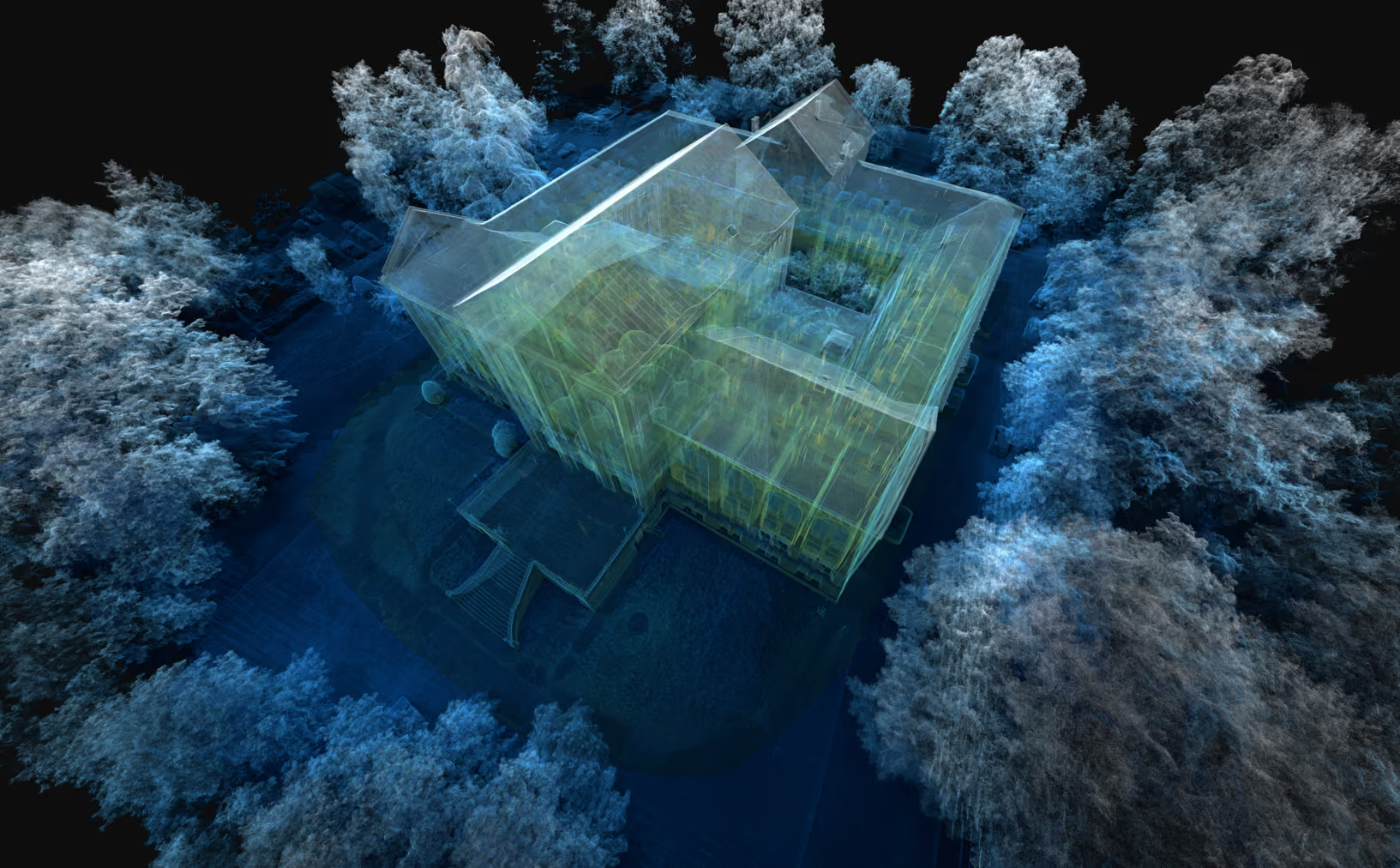



3D scanning of cultural monuments enables the precise documentation of historic buildings, façades, sculptures, churches, monasteries, museum exhibits and archaeological sites.
Radin 3D uses 3D laser scanning, LiDAR technology and photogrammetry to create accurate digital documentation of the existing condition. After scanning, the data is processed and prepared in formats suitable for restoration, conservation, design, archiving and the protection of cultural heritage.
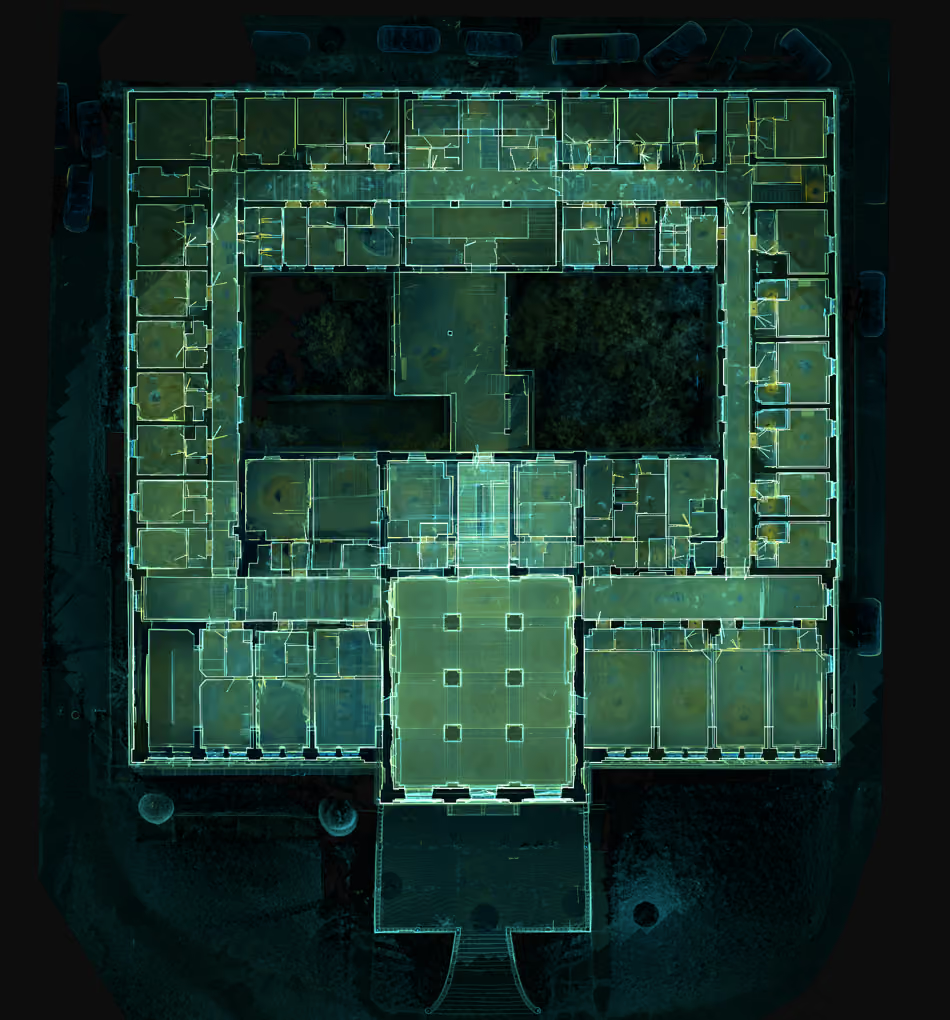
This type of three-dimensional building survey is particularly important when a structure has complex geometry, sensitive surfaces, decorative elements or incomplete technical documentation. Depending on the project, deliverables may include a point cloud, 2D plans, technical drawings, a 3D model or a Revit/BIM model of the existing condition.
How we carry out 3D scanning of historic buildings and spaces?
Every cultural heritage site requires a tailored approach. Scanning and measuring a museum façade is not the same as documenting a cultural monument, a church and monastery complex, a museum exhibition or an archaeological site. The process is therefore planned according to the intended use of the documentation, site accessibility and the required level of detail.
The aim is to provide accurate data that can be used for further work, without the need to return to the site for basic measurements.
1. On-site scanning of a historic building or space
We are often asked how much 3D scanning of a monument or historic building costs. The first step is to assess the structure, access conditions and the required scope of the survey.
The site is then captured using 3D laser scanning with modern LiDAR equipment. Photogrammetry may also be used where necessary, particularly when surface textures, appearance and visual documentation are important.
The survey may include
- façades
- sculptures
- reliefs
- decorative elements
- openings and cornices
- walls, vaults and domes
- bell towers and roof areas
- the surrounding space and terrain
The scanning process is contactless. The scanner does not touch the structure, which is particularly important when documenting frescoes, stone, render, historic façades and sensitive heritage surfaces.
2. Point cloud processing
After scanning, the collected data is processed and converted into an accurate point cloud, creating a digital record of the building’s actual condition. This data can be used to check dimensions, inclinations, deformations, the position of façade elements, relationships between different parts of the structure and other details important for design, restoration and cultural heritage protection.
The processed data can serve as a reliable archive of the existing condition, a basis for preparing 2D documentation and 3D models, as well as material for damage assessment and the planning of future work.
3. Preparation of technical documentation for a historic building
Technical documentation is created from the processed point cloud according to the requirements of the project.
Deliverables may include DWG drawings, floor plans, sections, elevations, 3D models, BIM models or 3D mesh representations. The documentation is prepared for architects, restorers, conservators, museums, local authorities, heritage protection institutes and design practices.
This means that monument scanning does not end with the survey itself. The client receives usable data for specific further work.
Why is 3D scanning of cultural monuments carried out?
3D scanning of cultural monuments is carried out when the existing condition of a building, space or individual architectural detail needs to be recorded accurately. Approximate measurements are not sufficient for protected buildings, because every renovation, repair or restoration project must be based on accurate and verifiable data. This method is particularly useful when a building has no up-to-date documentation, when façades are damaged or when a digital record needs to be preserved before work begins. Laser and three-dimensional scanning of monuments makes it possible to document dimensions, deformations, inclinations, reliefs, openings, vaults and other elements that are important for design and cultural heritage protection.
The data obtained through scanning can be used for restoration, the preparation of design documentation, cultural heritage digitisation, archival recording of the existing condition, damage analysis, façade reconstruction, the creation of replica details, virtual presentations and scientific research.
Laser scanning of monuments reduces the risk of errors associated with manual measurement. Instead of relying on additional site checks and incomplete plans, the client receives an accurate digital record of the entire building, space or selected detail.
Benefits of 3D laser scanning compared with traditional measurement
Traditional measurement of historic buildings is often slow, limited and dependent on access to every part of the structure. With tall façades, vaults, domes, decorative elements, sculptures and sensitive surfaces, manual measurement cannot always capture every detail and irregularity.
3D laser scanning enables a building to be documented quickly, accurately and without physical contact with the surface. This is particularly important for cultural monuments, where the risk of damage must be minimised and unnecessary contact with historic materials avoided.
A key benefit of this method is that the recorded data can be used repeatedly. The digital record makes it possible to check dimensions, heights, inclinations, deformations, the position of individual details and the relationships between different parts of the building at a later stage, without another site visit. In this way, laser scanning of monuments provides a more reliable basis for design, restoration, façade renovation, the preparation of technical documentation and the long-term archiving of the existing condition.
Where are laser scanning and 3D scanning used in cultural heritage protection?
Laser scanning and 3D scanning are used when the existing condition of a historic building, façade, monument, exhibit or archaeological site needs to be documented accurately. The data collected through scanning supports conservation, restoration, design, archiving and damage assessment.

Façade reconstruction and laser scanning
Laser scanning of façades is used for historic buildings, older public buildings, churches and protected properties. It is particularly useful when a façade includes decorative features, reliefs, cornices, columns, damage or deformation.
Scanning provides an accurate basis for repairs, design work, façade restoration and the creation of replica details. The project team does not have to rely on outdated plans, but can work from the building’s actual condition.
Scanning churches and monasteries
Scanning churches and monasteries can include places of worship, bell towers, domes, vaults, frescoes, monastic residences and entire monastery complexes. These buildings often have complex geometry and details that are difficult to measure using conventional methods.
The collected data can be used for restoration, conservation, the preparation of technical documentation and the long-term preservation of ecclesiastical heritage.
Digitisation of museum exhibits and virtual tours
Cultural heritage digitisation can include sculptures, busts, reliefs, archaeological artefacts and museum exhibits. 3D data makes it possible to preserve valuable objects in digital form.
The scan data can be used to create 3D visualisations, digital archives, educational materials and virtual tours for museums, galleries and cultural institutions.
Archaeological sites and field research
At archaeological sites, it is important to record existing conditions quickly and accurately, particularly before excavation continues or protective work begins.
3D scanning of a site enables the documentation of excavations, foundations, walls, terrain relief and uncovered structures. The data can be used for scientific analysis, archiving, presentation and the planning of further research.
Data formats ready for further use
After 3D scanning of a cultural monument, the data is delivered in formats suitable for design, restoration, analysis, archiving and technical documentation.
Depending on the scope of the project, deliverables may include a point cloud in RCP, E57 or LAS format, 2D documentation in DWG and PDF format, floor plans, sections and elevations, as well as a 3D model, 3D mesh or BIM model for Revit, Archicad and IFC.
This provides architects, restorers, conservators and design teams with data that is ready for further use in the software they already work with.

Why choose Radin 3D for scanning monuments and cultural heritage?
Radin 3D provides precise 3D scanning of cultural monuments, historic buildings, façades, churches, monasteries, museum exhibits and spaces that require careful documentation. Each project is planned according to the type of structure, site access, required level of detail and intended use of the documentation. The client receives accurate data that can be used for restoration, conservation, design, archiving and analysis of the existing condition. The scanning process is contactless, fast and safe for sensitive surfaces, which is particularly important for protected heritage buildings.
Radin 3D uses modern LiDAR and 3D scanning equipment, delivering data ready for further use in CAD and BIM software. In addition to 3D scanning of cultural monuments, the team also provides 3D laser scanning of buildings, laser measurement of a flat’s floor area, laser scanning of commercial premises, scanning of churches and monasteries, and many other services for the precise documentation of existing conditions.
Every monument, façade, church, monastery, museum exhibit or archaeological site has value that should be preserved. Send us information about the structure, its location, photographs and the purpose of the project, and the Radin 3D team will recommend the most suitable scanning method, documentation scope and delivery format.
For further information about available services and the scope of scanning, request a free quote.
Frequently asked questions about 3D scanning of cultural monuments

The most commonly used methods are 3D laser scanning, LiDAR technology and photogrammetry. The most suitable method depends on the client’s requirements, the size of the structure, site accessibility, the required level of detail and the intended use of the documentation.
The duration depends on the size of the structure, access to the site, the complexity of the façade and the required level of detail. Smaller buildings or individual architectural features can be scanned within a few hours, while larger complexes may require one or more days of on-site work.
3D scanning of cultural monuments creates an accurate digital record of the existing condition. The collected data can be used for restoration, technical documentation, damage assessment, façade reconstruction and long-term archiving.
No. Laser scanning of cultural monuments is contactless and safe for sensitive surfaces, including frescoes, stone, reliefs, render, sculptures and protected buildings.
Yes. Depending on the project requirements, deliverables may include a point cloud, DWG drawings, a 3D model, 3D mesh or BIM model for further use in CAD and BIM software.
The survey scope and required level of detail are defined first. The façade, bell tower, domes, vaults and decorative features are then captured using 3D laser scanning, after which the data is processed and prepared in the agreed delivery formats.
The cost of 3D scanning depends on the size of the space or structure, the complexity of the façade, the number of details, site accessibility and the required deliverables. The cost will differ for a sculpture, church, monastery, fortress, museum exhibition or archaeological site. For an accurate estimate, it is best to send us photographs, the location and the purpose of the project.
In Serbia, 3D scanning of cultural monuments is carried out by specialist teams experienced in 3D laser scanning, building digitisation and the preparation of technical documentation. Radin 3D provides scanning services for historic buildings, façades, churches, monasteries and other sites that require accurate documentation of their existing condition.